How Can the Number of Electoral Votes in a State Be Changed?
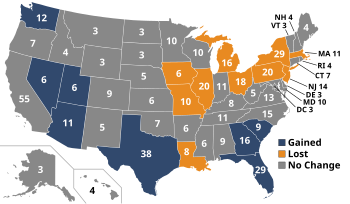
Electoral votes by land/federal district for the elections of 2012, 2016, and 2020, with apportionment changes between the 2000 and 2010 Censuses
The following is a summary of the electoral vote changes between United States presidential elections. It summarizes the changes in the Electoral Higher vote by comparing Usa presidential ballot results for a given year with those from the immediate preceding election. Information technology tracks those states which changed their support between parties every bit well every bit changes resulting from other factors, such equally reapportionment.
1792 vs. 1788 [edit]
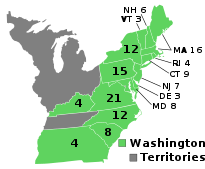
Electoral votes of the political party that won in 1792: None
| 1788 electoral vote George Washington | Gain due to reapportionment | 1788 issue under the 1792 apportionment | Gains | Losses | 1792 electoral vote George Washington |
|---|---|---|---|---|---|
| 69 |  26 26 | 95 | 37 | 132 | |
| Kentucky(4) New York(12) Due north Carolina(12) Rhode Isle(4) Vermont(three) Virginia(2)* |
* Washington received only ten of Virginia's 12 electoral votes in the 1788 election.
1796 vs. 1792 [edit]
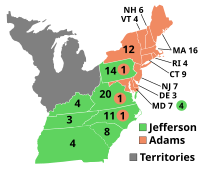
Electoral votes of the party that won in 1796: Federalist Political party
| 1792 electoral vote George Washington | Gains | Losses | 1796 balloter vote John Adams |
|---|---|---|---|
| 132 | one |  62 62 | 71 |
| Vermont(1)* | Georgia(iv) Kentucky(4) North Carolina(11)† Maryland(1)‡ Pennsylvania(xiv)↑ Due south Carolina(8) Virginia(20)↓ |
Though George Washington was officially not-partisan during his presidency, he was broadly sympathetic to the Federalist platform and was endorsed by both parties.
* Washington received only iii of Vermont's 4 electoral votes in the 1792 election.
† Adams received only i of Northward Carolina'south 12 electoral votes in the 1796 election.
‡ Washington only received 8 of Maryland's 10 balloter votes in the 1792 election. In 1796, Adams received seven of 10.
↑ Adams received only 1 of Pennsylvania'south xv electoral votes in the 1796 election.
↓ Adams received but 1 of Virginia'south 21 balloter votes in the 1796 ballot.
1800 vs. 1796 [edit]

Electoral votes of the party that won in 1800: Democratic-Republican Party
| 1796 electoral vote Thomas Jefferson | Gains | Losses | 1800 electoral vote Thomas Jefferson |
|---|---|---|---|
| 68 | xiv | 9 | 73 |
| Maryland(1)* New York(12) Virginia(one)† | N Carolina(3)‡ Pennsylvania(6)↑ |
* Jefferson received only 4 of Maryland's 10 electoral votes in the 1796 election. In 1800, he received 5 of ten.
† Jefferson received simply 20 of Virginia's 21 electoral votes in the 1796 election.
‡ Jefferson received merely 8 of North Carolina'south 12 balloter votes in the 1800 election, equally opposed to the eleven of 12 he received in 1796.
↑ Jefferson received only 8 of Pennsylvania'south 15 electoral votes in the 1800 election, every bit opposed to the fourteen of 15 he received in 1796.
1804 vs. 1800 [edit]
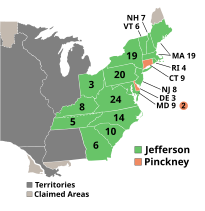
Balloter votes of the party that won in 1804: Democratic-Republican Party
| 1800 electoral vote Thomas Jefferson | Gain due to reapportionment | 1800 upshot under the 1804 circulation | Gains | Losses | 1804 balloter vote Thomas Jefferson |
|---|---|---|---|---|---|
| 73 | 28 | 101 | 61 | 162 | |
| Maryland(iii)* Massachusetts(19) New Hampshire(7) New Bailiwick of jersey(viii) North Carolina(iv)† Ohio(3) Pennsylvania(vii)‡ Rhode Island(4) Vermont(6) |
* Jefferson received only 5 of Maryland's x electoral votes in the 1800 election. In 1804, he received 9 of 11.
† Jefferson received only 8 of Northward Carolina's 12 electoral votes in the 1800 election.
‡ Jefferson received only 8 of Pennsylvania'due south xv electoral votes in the 1800 ballot.
1808 vs. 1804 [edit]
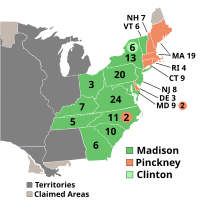
Electoral votes of the party that won in 1808: Democratic-Republican Party
| 1804 electoral vote Thomas Jefferson | Gains | Losses | 1808 electoral vote James Madison |
|---|---|---|---|
| 162 | 40 | 122 | |
| Kentucky(ane)* Massachusetts(19) New Hampshire(7) New York(6)† North Carolina(3)‡ Rhode Isle(iv) |
* Madison received simply 7 of Kentucky's eight electoral votes in the 1808 election.
† Madison received only 13 of New York's 19 electoral votes in the 1808 election.
‡ Madison received merely eleven of North Carolina's 14 electoral votes in the 1808 election.
1812 vs. 1808 [edit]

Electoral votes of the party that won in 1812: Autonomous-Republican Political party
| 1808 balloter vote James Madison | Gain due to reapportionment | 1808 event nether the 1812 circulation | Gains | Losses | 1812 electoral vote James Madison |
|---|---|---|---|---|---|
| 122 | 33 | 156 | 7 | 35 | 128 |
| Kentucky(1)* Due north Carolina(iii)† Louisiana(3) | Maryland(iii)‡ New Jersey(8) New York(23) Ohio(i)↑ |
* Madison received only seven of Kentucky's 8 electoral votes in the 1808 ballot.
† Madison received simply 11 of N Carolina'southward fourteen electoral votes in the 1808 election.
‡ Madison received just 9 of Maryland'due south 11 electoral votes in the 1808 election. In 1812, Madison received 6 out of 11.
↑ Madison received only 7 of Ohio's 8 electoral votes in the 1812 election.
1816 vs. 1812 [edit]
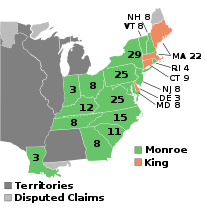
Electoral votes of the party that won in 1816: Democratic-Republican Political party
| 1812 balloter vote James Madison | Gains | Losses | 1816 electoral vote James Monroe |
|---|---|---|---|
| 128 | 55 | 183 | |
| Indiana(3) Maryland(2)* New Hampshire(8) New Jersey(8) New York(29) Ohio(i)† Rhode Island (4) |
* Madison received only half-dozen of Maryland's 11 electoral votes in the 1812 election. In 1816, Monroe received 8 out of eleven
† Madison received only 7 of Ohio's eight electoral votes in the 1812 election.
1820 vs. 1816 [edit]
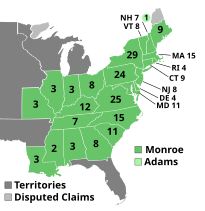
Electoral votes of the party that won in 1820: Democratic-Republican Party
| 1816 balloter vote James Monroe | Gain due to reapportionment | 1816 result under the 1820 apportionment | Gains | Losses | 1820 balloter vote James Monroe |
|---|---|---|---|---|---|
| 183 | ii | 185 | 48 | 1 | 231 |
| Alabama(3) Connecticut(ix) Delaware(4) Illinois(nine) Massachusetts(xv) Maine(3) Mississippi(2) Missouri(3) | New Hampshire(one)* |
* Monroe received merely vii of New Hampshire's viii electoral votes in 1820.
1824 vs. 1820 [edit]
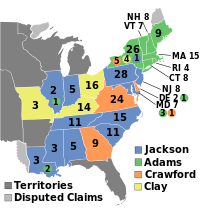
Electoral votes of the candidate that won in 1824: ane of several from the Autonomous-Republican Party
| 1820 electoral vote John Quincy Adams | Gains | Losses | 1824 electoral vote John Quincy Adams |
|---|---|---|---|
| 1 | 83 | 84 | |
| Connecticut(8) Delaware(1)* Illinois(1)† Louisiana(2)‡ Maryland(iii)↑ Maine(nine) Massachusetts(15) New Hampshire(7)↓ New York (26)# Rhode Isle(four) Vermont(7) |
Due to multiple candidates from the same party in the 1824 election (and the party being the simply major party at the time), this chart only shows the electoral votes of the winning candidate, even though he did not receive a plurality of the electoral votes and the ballot was decided in the U.s. House of Representatives.
* Adams received just 1 of Delaware'due south 3 electoral votes in the 1824 election.
† Adams received only 1 of Illinois'southward 3 electoral votes in the 1824 ballot.
‡ Adams received simply 2 of Louisiana's 5 electoral votes in the 1824 election.
↑ Adams received but 3 of Maryland'south 11 electoral votes in the 1824 election.
↓ Adams received only 1 of New Hampshire's 8 balloter votes in 1820 and all 8 in 1824.
# Adams received only 26 of New York'south 36 electoral votes in the 1824 election.
1828 vs. 1824 [edit]

Electoral votes of the candidate that won in 1828: candidate of the Democratic Political party in 1828 and one of several from the Democratic-Republican Party in 1824
| 1824 electoral vote Andrew Jackson | Gains | Losses | 1828 balloter vote Andrew Jackson |
|---|---|---|---|
| 99 | 89 | ten | 178 |
| Georgia(9) Illinois(1)* Kentucky(14) Louisiana(2)† Maine(1)‡ Missouri(3) New York(nineteen)↑ Ohio(16) Virginia(24) | Maryland(2)↓ New Bailiwick of jersey(viii) |
Due to multiple candidates from the aforementioned political party in the 1824 ballot (and the party being the only major party at the time), this nautical chart only shows the electoral votes changes of the winning candidate of 1828.
* Jackson received only ii of Illinois's 3 balloter votes in the 1824 ballot.
† Jackson received but 3 of Louisiana's 5 balloter votes in the 1824 election.
‡ Jackson received just ane of Maine's 9 electoral votes in the 1828 election.
↑ Jackson received 1 of New York's 36 balloter votes in 1824 and 20 of 26 in 1828.
↓ Jackson received 7 of Maryland'due south eleven electoral votes in 1824 and 5 of 11 in 1828.
1832 vs. 1828 [edit]
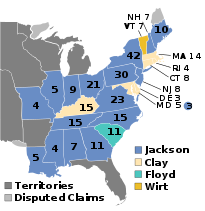
Electoral votes of the political party that won in 1832: Democratic Party
| 1828 electoral vote Andrew Jackson | Gain due to reapportionment | 1828 result under the 1832 circulation | Gains | Losses | 1832 electoral vote Andrew Jackson |
|---|---|---|---|---|---|
| 178 | 23 | 201 | 46 | 28 | 219 |
| Maine(ix)* New Hampshire(vii) New Jersey(8) New York(22)† | Kentucky(15) Maryland(2)‡ South Carolina(xi) |
* Jackson received i of Maine's 9 electoral votes in 1828 and all x in 1832.
† Jackson received 20 of New York'south 36 electoral votes in 1828 and all 42 in 1832.
‡ Jackson received 5 of Maryland'southward 11 balloter votes in 1828 and 3 of 11 in 1832.
1836 vs. 1832 [edit]
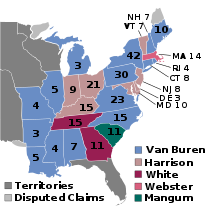
Electoral votes of the political party that won in 1836: Democratic Party
| 1832 electoral vote Andrew Jackson | Gains | Losses | 1836 electoral vote Martin Van Buren |
|---|---|---|---|
| 219 | xviii | 67 | 170 |
| Arkansas(3) Connecticut(8) Michigan(3) Rhode Island(4) | Georgia(xi) Indiana(ix) Maryland(3)* New Jersey(8) Ohio(21) Tennessee(15) |
* Jackson received only 3 of Maryland'due south eight electoral votes in the 1832 ballot.
1840 vs. 1836 [edit]

Balloter votes of the party that won in 1840: Whig Political party
| 1836 balloter vote William Henry Harrison Hugh Lawson White Daniel Webster Willie Person Mangum | Gains | Losses | 1840 electoral vote William Henry Harrison |
|---|---|---|---|
| 124 | 121 | 11 | 234 |
| Connecticut(viii) Louisiana(five) Maine(x) Michigan(iii) Mississippi(4) New York(42) North Carolina(xv) Pennsylvania(xxx) Rhode Isle(iv) | South Carolina(11) |
1844 vs. 1840 [edit]

Electoral votes of the political party that won in 1844: Democratic Political party
| 1840 electoral vote Martin Van Buren | Gain due to reapportionment | 1840 upshot nether the 1844 apportionment | Gains | Losses | 1844 electoral vote James K. Polk |
|---|---|---|---|---|---|
| 60 | 0 | 60 | 110 | 170 | |
| Georgia(10) Indiana(12) Louisiana(six) Maine(9) Michigan(5) Mississippi(6) New York(36) Pennsylvania(26) |
1848 vs. 1844 [edit]

Electoral votes of the party that won in 1848: Whig Party
| 1844 balloter vote Henry Dirt | Gains | Losses | 1848 electoral vote Zachary Taylor |
|---|---|---|---|
| 105 | 81 | 23 | 163 |
| Georgia(10) Florida(3) Louisiana(half-dozen) New York(36) Pennsylvania(26) | Ohio(23) |
1852 vs. 1848 [edit]
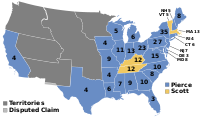
Electoral votes of the party that won in 1852: Democratic Party
| 1848 balloter vote Lewis Cass | Gain due to reapportionment | 1848 result nether the 1852 circulation | Gains | Losses | 1852 electoral vote Franklin Pierce |
|---|---|---|---|---|---|
| 127 | iv | 131 | 123 | 254 | |
| California(4) Connecticut(vi) Delaware(iii) Florida(3) Georgia(x) Louisiana(half dozen) Maryland(viii) New Jersey(7) New York(35) North Carolina(10) Pennsylvania(27) Rhode Island(iv) |
1856 vs. 1852 [edit]

Balloter votes of the party that won in 1856: Democratic Party
| 1852 electoral vote Franklin Pierce | Gains | Losses | 1856 electoral vote James Buchanan |
|---|---|---|---|
| 254 | 24 | 104 | 174 |
| Kentucky(12) Tennessee(12) | Connecticut(vi) Iowa(four) Maine(8) Maryland(8) Michigan(6) New Hampshire(v) New York(35) Ohio(23) Rhode Island(4) Wisconsin(5) |
1860 vs. 1856 [edit]
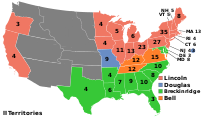
Electoral votes of the political party that won in 1860: Republican Party
| 1856 balloter vote John Fremont | Gains | Losses | 1860 electoral vote Abraham Lincoln |
|---|---|---|---|
| 114 | 66 |  | 180 |
| California(4) Illinois(11) Indiana(3) Minnesota(iv) New Jersey(4)* Oregon(iii) Pennsylvania(27) |
* Lincoln received only 4 of New Bailiwick of jersey's 7 electoral votes in the 1860 ballot.
1864 vs. 1860 [edit]
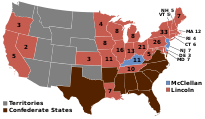
Balloter votes of the party that won in 1864: Republican Party
| 1860 electoral vote Abraham Lincoln | Gain due to reapportionment | 1860 result under the 1864 circulation | Gains | Losses | 1864 electoral vote Abraham Lincoln |
|---|---|---|---|---|---|
| 180 | viii | 188 | 28 | 4 | 212 |
| Kansas(iii) Maryland(7) Missouri(11) Nevada(2) West Virginia(5) | New Jersey(four)* |
* Lincoln received only 4 of New Bailiwick of jersey's 7 electoral votes in 1860.
1868 vs. 1864 [edit]
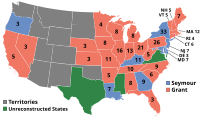
Balloter votes of the party that won in 1868: Republican Political party
| 1864 electoral vote Abraham Lincoln | Gains | Losses | 1868 balloter vote Ulysses South. Grant |
|---|---|---|---|
| 212 | 44 | 43 | 214 |
| Alabama(8) Arkansas(5) Florida(3) Nebraska(three) Nevada(1)* North Carolina(nine) S Carolina(6) Tennessee(10) | Maryland(7) New York(33) Oregon(iii) |
* Lincoln received only two of Nevada's 3 electoral votes in 1864.
1872 vs. 1868 [edit]

Electoral votes of the party that won in 1872: Republican Party
| 1868 electoral vote Ulysses South. Grant | Gain due to reapportionment | 1868 result nether the 1872 apportionment | Gains | Losses | 1872 balloter vote Ulysses Southward. Grant |
|---|---|---|---|---|---|
| 214 | 35 | 249 | 69 | 32 | 286 |
| Delaware(3) Mississippi(8) New Jersey(9) New York(35) Oregon(iii) Virginia(11) | Arkansas(5) Missouri(15) Tennessee(12) |
1876 vs. 1872 [edit]

Balloter votes of the political party that won in 1876: Republican Party
| 1872 electoral vote Ulysses S. Grant | Gains | Losses | 1876 balloter vote Rutherford B. Hayes |
|---|---|---|---|
| 286 | 11 | 112 | 185 |
| Colorado(3) Louisiana(eight) | Alabama(ten) Connecticut(six) Delaware(iii) Indiana(15) New Bailiwick of jersey(ix) New York(35) North Carolina(10) Virginia(11) West Virginia(5) |
1880 vs. 1876 [edit]
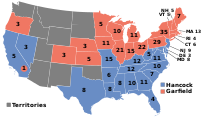
Electoral votes of the party that won in 1880: Republican Political party
| 1876 balloter vote Rutherford Hayes | Gains | Losses | 1880 electoral vote James A. Garfield |
|---|---|---|---|
| 185 | 56 | 27 | 214 |
| Connecticut(6) Indiana(15) New York(35) | California(5)* Florida(4) Louisiana(8) S Carolina(7) Nevada(3) |
* Garfield received only 1 of California's six balloter votes in the 1880 ballot.
1884 vs. 1880 [edit]
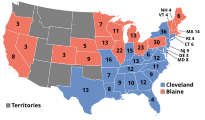
Balloter votes of the political party that won in 1884: Democratic Party
| 1880 electoral vote Winfield Hancock | Gain due to reapportionment | 1880 effect nether the 1884 apportionment | Gains | Losses | 1884 electoral vote Grover Cleveland |
|---|---|---|---|---|---|
| 155 | 15 | 170 | 57 | 8 | 219 |
| Connecticut(6) Indiana(15) New York(36) | California(five)* Nevada(3) |
* Hancock received only 5 of California'south 6 electoral votes in 1880.
1888 vs. 1884 [edit]
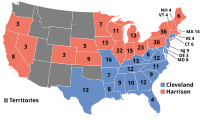
Electoral votes of the political party that won in 1888: Republican Party
| 1884 electoral vote James G. Blaine | Gains | Losses | 1888 electoral vote Benjamin Harrison |
|---|---|---|---|
| 182 | 51 | 233 | |
| Indiana(xv) New York(36) |
1892 vs. 1888 [edit]

Balloter votes of the party that won in 1892: Democratic Party
| 1888 electoral vote Grover Cleveland | Gain due to reapportionment | 1888 result nether the 1892 circulation | Gains | Losses | 1892 electoral vote Grover Cleveland |
|---|---|---|---|---|---|
| 168 | 7 | 175 | 102 | 277 | |
| California(viii)* Illinois(24) Indiana(xv) Michigan(5)† New York(36) Northward Dakota(one)‡ Ohio(1)↑ Wisconsin(12) |
* Cleveland received but viii of California'south 9 electoral votes in the 1892 election.
† Cleveland received only 5 of Michigan's 14 electoral votes in the 1892 election.
‡ Cleveland received only one of Northward Dakota's three electoral votes in the 1892 election.
↑ Cleveland received merely 1 of Ohio's 23 electoral votes in the 1892 election.
1896 vs. 1892 [edit]

Electoral votes of the party that won in 1896: Republican Party
| 1892 electoral vote Benjamin Harrison | Gains | Losses | 1896 balloter vote William McKinley |
|---|---|---|---|
| 145 | 148 | 22 | 271 |
| California(7)* Connecticut(6) Delaware(3) Illinois(24) Indiana(xv) Kentucky(12)† Maryland(viii) Michigan(five)‡ New Bailiwick of jersey(10) New York(36) North Dakota(2)↑ Ohio(ane)↓ Oregon(1)# West Virginia(6) Wisconsin(12) | Montana(three) Nebraska(8) South Dakota(4) Washington(4) Wyoming(3) |
* Harrison received 1 of California's nine electoral votes in 1892 vs. McKinley's 8 of ix in 1896.
† McKinley received just 12 of Kentucky's thirteen electoral votes in the 1896 ballot.
‡ Harrison received only 9 of Michigan'due south 14 electoral votes in the 1892 ballot.
↑ Harrison received simply 1 of North Dakota'due south 3 balloter votes in the 1892 election.
↓ Harrison received merely 22 of Ohio'south 23 electoral votes in the 1892 election.
# Harrison received just 3 of Oregon's 4 balloter votes in the 1892 election.
1900 vs. 1896 [edit]
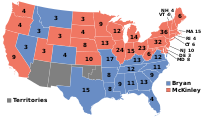
Electoral votes of the party that won in 1900: Republican Political party
| 1896 electoral vote William McKinley | Gains | Losses | 1900 electoral vote William McKinley |
|---|---|---|---|
| 271 | 33 | 12 | 292 |
| California(1)* Kansas(10) Nebraska(8) South Dakota(4) Utah(3) Washington(4) Wyoming(3) | Kentucky(12)† |
* McKinley received only 8 of California'south 9 electoral votes in the 1896 election.
† McKinley received only 12 of Kentucky'south thirteen electoral votes in the 1896 election.
1904 vs. 1900 [edit]
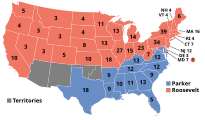
Balloter votes of the party that won in 1904: Republican Party
| 1900 electoral vote William McKinley | Gain due to reapportionment | 1900 issue under the 1904 apportionment | Gains | Losses | 1904 balloter vote Theodore Roosevelt |
|---|---|---|---|---|---|
| 292 | 19 | 311 | 32 | vii | 336 |
| Colorado(v) Idaho(iii) Missouri(eighteen) Montana(3) Nevada(3) | Maryland(7)* |
* Theodore Roosevelt received only 1 of Maryland's 8 electoral votes in the 1904 election
1908 vs. 1904 [edit]

Balloter votes of the political party that won in 1908: Republican Political party
| 1904 electoral vote Theodore Roosevelt | Gains | Losses | 1908 electoral vote William Howard Taft |
|---|---|---|---|
| 336 | one | 16 | 321 |
| Maryland(1)* | Colorado(v) Nebraska(8) Nevada(3) |
* Taft received 2 of eight Maryland electors in 1908 vs. Roosevelt'southward 1 of 8 in 1904
1912 vs. 1908 [edit]
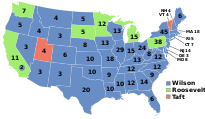
Electoral votes of the party that won in 1912: Democratic Party
| 1908 electoral vote William Jennings Bryan | Proceeds due to reapportionment | 1908 result under the 1912 apportionment | Gains | Losses | 1912 balloter vote Woodrow Wilson |
|---|---|---|---|---|---|
| 162 | 10 | 172 | 263 | 435 | |
| California(2)* Connecticut(7) Delaware(three) Idaho(4) Illinois(29) Indiana(15) Iowa(13) Kansas(x) Maine(6) Maryland(2)† Massachusetts(xviii) Missouri(18) Montana(iv) New Hampshire(4) New Jersey(xiv) New York(45) N Dakota(5) Ohio(24) Oregon(v) Rhode Island(5) West Virginia(8) Wisconsin(13) Wyoming(3) |
* Wilson received only 2 of California'southward thirteen electoral votes in the 1912 election
† ''Bryan received only 6 of Maryland's 8 balloter votes in the 1908 election
1916 vs. 1912 [edit]
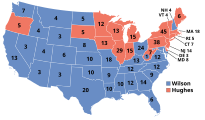
Electoral votes of the party that won in 1916: Autonomous Party
| 1912 balloter vote Woodrow Wilson | Gains | Losses | 1916 balloter vote Woodrow Wilson |
|---|---|---|---|
| 435 | 22 | 180 | 277 |
| California(11)* Utah(4) Washington(7) | Connecticut(7) Delaware(iii) Illinois(29) Indiana(xv) Iowa(13) Maine(6) Massachusetts(18) New Jersey(14) New York(45) Oregon(5) Rhode Island(5) Due west Virginia(seven)† Wisconsin(13) |
* Wilson received but two out of California'due south thirteen electoral votes in the 1912 election
† Wilson received only i out of Westward Virginia's 8 electoral votes in the 1916 election
1920 vs. 1916 [edit]

Electoral votes of the political party that won in 1920: Republican Political party
| 1916 balloter vote Charles Evans Hughes | Gains | Losses | 1920 electoral vote Warren Thou. Harding |
|---|---|---|---|
| 254 | 150 | 404 | |
| Arizona(3) California(13) Colorado(vi) Idaho(four) Kansas(x) Maryland(8) Missouri(18) Montana(4) Nebraska(eight) Nevada(three) New Hampshire(iv) New Mexico(three) North Dakota(5) Ohio(24) Oklahoma(10) Tennessee (12) Utah(four) Washington(7) Westward Virginia(1)* Wyoming(3) |
* Hughes received only 7 out of Westward Virginia's 8 electoral votes in the 1916 ballot
1924 vs. 1920 [edit]
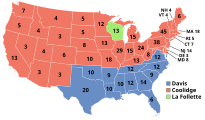
Electoral votes of the party that won in 1924: Republican Political party
| 1920 electoral vote Warren G. Harding | Gains | Losses | 1924 electoral vote Calvin Coolidge |
|---|---|---|---|
| 404 | 13 | 35 | 382 |
| Kentucky(13) | Oklahoma(10) Tennessee(12) Wisconsin(12) |
1928 vs. 1924 [edit]

Electoral votes of the political party that won in 1928: Republican Party
| 1924 electoral vote Calvin Coolidge | Gains | Losses | 1928 balloter vote Herbert Hoover |
|---|---|---|---|
| 382 | 85 | 23 | 444 |
| Florida(half-dozen) N Carolina(12) Oklahoma(10) Tennessee(12) Texas(20) Virginia(12) Wisconsin(thirteen) | Massachusetts(18) Rhode Island(5) |
1932 vs. 1928 [edit]

Electoral votes of the political party that won in 1932: Democratic Party
| 1928 electoral vote Alfred East. Smith | Loss due to reapportionment | 1928 result under the 1932 apportionment | Gains | Losses | 1932 electoral vote Franklin D. Roosevelt |
|---|---|---|---|---|---|
| 87 | 7 | eighty | 392 | 472 | |
| Arizona(3) California(22) Colorado(6) Florida(vii) Idaho(4) Illinois(29) Indiana(xiv) Iowa(11) Kansas(nine) Kentucky(11) Maryland(8) Michigan(19) Minnesota(11) Missouri(15) Montana(4) Nebraska(7) Nevada(3) New Jersey(16) New Mexico(three) New York(47) North Carolina(13) N Dakota(4) Ohio(26) Oregon(5) Oklahoma(eleven) South Dakota(four) Tennessee(11) Texas(23) Utah(4) Virginia(eleven) Washington(8) Westward Virginia(8) Wisconsin(12) Wyoming(three) |
1936 vs. 1932 [edit]

Electoral votes of the party that won in 1936: Democratic Party
| 1932 electoral vote Franklin D. Roosevelt | Gains | Losses | 1936 electoral vote Franklin D. Roosevelt |
|---|---|---|---|
| 472 | 51 | 523 | |
| Connecticut(viii) Delaware(three) New Hampshire(four) Pennsylvania(36) |
1940 vs. 1936 [edit]
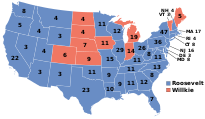
Electoral votes of the political party that won in 1940: Democratic Political party
| 1936 electoral vote Franklin D. Roosevelt | Gains | Losses | 1940 electoral vote Franklin D. Roosevelt |
|---|---|---|---|
| 523 | 74 | 449 | |
| Colorado(6) Indiana(fourteen) Iowa(11) Kansas(9) Michigan(nineteen) Nebraska(vii) North Dakota(four) South Dakota(4) |
1944 vs. 1940 [edit]
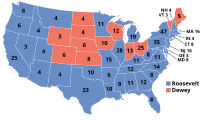
Electoral votes of the political party that won in 1944: Democratic Party
| 1940 balloter vote Franklin D. Roosevelt | Gain due to reapportionment | 1940 result under the 1944 apportionment | Gains | Losses | 1944 electoral vote Franklin D. Roosevelt |
|---|---|---|---|---|---|
| 449 | 4 | 453 | 19 | 40 | 432 |
| Michigan(19) | Ohio(25) Wisconsin(12) Wyoming(3) |
1948 vs. 1944 [edit]

Balloter votes of the party that won in 1948: Autonomous Political party
| 1944 electoral vote Franklin D. Roosevelt | Gains | Losses | 1948 balloter vote Harry Due south. Truman |
|---|---|---|---|
| 432 | 56 | 185 | 303 |
| Colorado(vi) Iowa(ten) Ohio(25) Wisconsin(12) Wyoming(3) | Alabama(11) Connecticut(8) Delaware(three) Louisiana(x) Maryland(8) Michigan(19) Mississippi(9) New Hampshire(4) New Jersey(sixteen) New York(47) Oregon(6) Pennsylvania(35) South Carolina(viii) Tennessee(i)* |
* Truman received simply 11 out of Tennessee's 12 balloter votes
1952 vs. 1948 [edit]
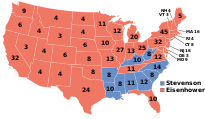
Balloter votes of the party that won in 1952: Republican Political party
| 1948 electoral vote Thomas Dewey | Loss due to reapportionment | 1948 result under the 1952 apportionment | Gains | Losses | 1952 electoral vote Dwight D. Eisenhower |
|---|---|---|---|---|---|
| 189 | three | 186 | 256 | 442 | |
| Arizona(four) California(32) Colorado(6) Florida(x) Idaho(4) Illinois(27) Iowa(ten) Massachusetts(16) Minnesota(xi) Missouri(13) Montana(four) Nevada(3) New United mexican states(4) Ohio(25) Oklahoma(viii) Rhode Island(4) Tennessee(11) Texas(24) Utah(4) Virginia(12) Washington(9) Wisconsin(12) Wyoming(3) |
1956 vs. 1952 [edit]
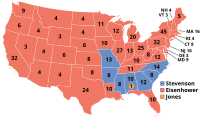
Electoral votes of the party that won in 1956: Republican Party
| 1952 electoral vote Dwight Eisenhower | Gains | Losses | 1956 electoral vote Dwight Eisenhower |
|---|---|---|---|
| 442 | 28 | xiii | 457 |
| Kentucky(10) Louisiana(10) West Virginia(8) | Missouri(13) |
1960 vs. 1956 [edit]
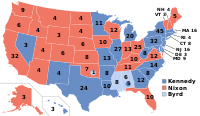
Electoral votes of the party that won in 1960: Democratic Political party
| 1956 balloter vote Adlai Stevenson | Gains | Losses | 1960 electoral vote John F. Kennedy |
|---|---|---|---|
| 73 | 243 | xiii | 303 |
| Connecticut (eight) Delaware(three) Hawaii(iii) Illinois(27) Louisiana(10) Maryland(9) Massachusetts(16) Michigan(20) Minnesota(xi) Nevada(3) New Jersey(16) New United mexican states(four) New York(45) Pennsylvania(32) Rhode Island(4) Texas(24) Due west Virginia(8) | Alabama(5)* Mississippi(8) |
* Kennedy received only 5 out of Alabama's 11 electoral votes
1964 vs. 1960 [edit]
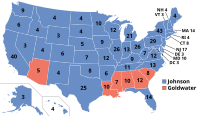
Electoral votes of the party that won in 1964: Democratic Party
| 1960 balloter vote John F. Kennedy | Loss due to reapportionment | 1960 upshot under the 1964 apportionment | Gains | Losses | 1964 balloter vote Lyndon B. Johnson |
|---|---|---|---|---|---|
| 303 | 9 | 294 | 227 | 35 | 486 |
| Alaska(3) California (40) Colorado (6) Commune of Columbia (3) Florida (14) Idaho (four) Indiana (13) Iowa (nine) Kansas (7) Kentucky (9) Maine (4) Montana (iv) Nebraska (5) New Hampshire (4) North Dakota (4) Ohio (26) Oklahoma (8) Oregon(6) South Dakota (4) Tennessee (11) Utah (4) Vermont (iii) Virginia(12) Washington (9) Wisconsin(12) Wyoming (3) | Alabama (v)* Georgia (12) Louisiana(10) South Carolina (viii) |
* Kennedy received only 5 electoral votes from Alabama in 1960 of what would have been 10 balloter votes in 1964
1968 vs. 1964 [edit]

Balloter votes of the party that won in 1968: Republican Party
| 1964 electoral vote Barry Goldwater | Gains | Losses | 1968 balloter vote Richard Nixon |
|---|---|---|---|
| 52 | 288 | 39 | 301 |
| Alaska(3) California(40) Colorado(6) Delaware(3) Florida(14) Idaho(4) Illinois(26) Indiana(13) Iowa(9) Kansas(7) Kentucky(ix) Missouri(12) Montana(4) Nebraska(5) Nevada(3) New Hampshire(4) New Jersey(17) New Mexico(4) Due north Carolina(12)* N Dakota(iv) Ohio(26) Oklahoma(8) Oregon(6) S Dakota(4) Tennessee(eleven) Utah(four) Vermont(3) Virginia(12) Wisconsin(12) Wyoming(3) | Alabama(10) Georgia(12) Louisiana(x) Mississippi(7) |
* Nixon received simply 12 out of Due north Carolina's thirteen balloter votes in 1968
1972 vs. 1968 [edit]
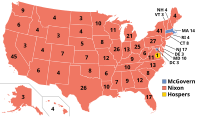
Electoral votes of the political party that won in 1972: Republican Party
| 1968 balloter vote Richard Nixon | Gain due to reapportionment | 1968 effect nether the 1972 apportionment | Gains | Losses | 1972 balloter vote Richard Nixon |
|---|---|---|---|---|---|
| 301 | v | 306 | 215 | ane | 520 |
| Alabama(9) Arkansas(half dozen) Connecticut(8) Georgia(12) Hawaii(four) Louisiana(10) Maine(4) Maryland(10) Michigan(21) Minnesota(10) Mississippi(vii) New York(41) North Carolina(ane)* Pennsylvania(27) Rhode Isle(iv) Texas(26) Washington(9) W Virginia(half-dozen) | Virginia(i)† |
* Nixon received only 12 out of North Carolina'southward 13 electoral votes in 1968
† Nixon received only 11 out of Virginia'due south 12 balloter votes in 1972
1976 vs. 1972 [edit]

Electoral votes of the party that won in 1976: Democratic Party
| 1972 balloter vote George McGovern | Gains | Losses | 1976 balloter vote Jimmy Carter |
|---|---|---|---|
| 17 | 280 | 297 | |
| Alabama(9) Arkansas(half-dozen) Delaware(3) Florida(17) Georgia(12) Hawaii(4) Kentucky(9) Louisiana(x) Maryland(10) Minnesota(x) Mississippi(7) Missouri(12) New York(41) N Carolina(13) Ohio(25) Pennsylvania(27) Rhode Island(4) Southward Carolina(8) Tennessee(x) Texas(26) West Virginia(half dozen) Wisconsin(eleven) |
1980 vs. 1976 [edit]

Electoral votes of the party that won in 1980: Republican Party
| 1976 electoral vote Gerald Ford | Gains | Losses | 1980 electoral vote Ronald Reagan |
|---|---|---|---|
| 240 | 249 | 489 | |
| Alabama(9) Arkansas(6) Delaware(3) Florida(17) Kentucky(nine) Louisiana(ten) Massachusetts(xiv) Mississippi(7) Missouri(12) New York(41) North Carolina(thirteen) Ohio(25) Pennsylvania(27) Due south Carolina(eight) Tennessee(ten) Texas(26) Washington(ane)* Wisconsin(xi) |
* Ford received only viii of Washington's 9 balloter votes in 1976, while 1 faithless elector voted for Reagan
1984 vs. 1980 [edit]

Electoral votes of the party that won in 1984: Republican Political party
| 1980 electoral vote Ronald Reagan | Gain due to reapportionment | 1980 result under the 1984 circulation | Gains | Losses | 1984 electoral vote Ronald Reagan |
|---|---|---|---|---|---|
| 489 | | 489 | 36 | 525 | |
| Georgia(12) Hawaii(4) Maryland(10) Rhode Isle(iv) West Virginia(6) |
1988 vs. 1984 [edit]
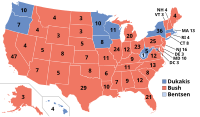
Electoral votes of the political party that won in 1988: Republican Political party
| 1984 electoral vote Ronald Reagan | Gains | Losses | 1988 electoral vote George H. W. Bush |
|---|---|---|---|
| 525 | 99 | 426 | |
| Hawaii(4) Iowa(8) Massachusetts(13) New York(36) Oregon(seven) Rhode Island(iv) Washington(ten) W Virginia(6) Wisconsin(xi) |
1992 vs. 1988 [edit]
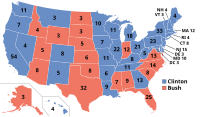
Electoral votes of the party that won in 1992: Democratic Party
| 1988 electoral vote Michael Dukakis | Loss due to reapportionment | 1988 upshot nether the 1992 apportionment | Gains | Losses | 1992 balloter vote Bill Clinton |
|---|---|---|---|---|---|
| 111 | 5 | 106 | 264 | 370 | |
| Arkansas(6) California(54) Colorado(viii) Connecticut(8) Delaware(3) Georgia(13) Illinois(22) Kentucky(8) Louisiana(ix) Maine(4) Maryland(10) Michigan(18) Missouri(11) Montana(iii) Nevada(4) New Hampshire(iv) New Jersey(xv) New United mexican states(v) Ohio(21) Pennsylvania(23) Tennessee(11) Vermont(3) West Virginia(one)* |
* Dukakis received just 5 of West Virginia's 6 electoral votes in 1988, while i faithless elector voted for his running mate Lloyd Bentsen. Due to reapportionment, West Virginia had 5 electoral votes in 1992, of which Clinton won all of them
1996 vs. 1992 [edit]
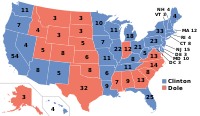
Balloter votes of the party that won in 1996: Autonomous Party
| 1992 balloter vote Bill Clinton | Gains | Losses | 1996 electoral vote Neb Clinton |
|---|---|---|---|
| 370 | 33 | 24 | 379 |
| Arizona(8) Florida(25) | Colorado(viii) Georgia(13) Montana(3) |
2000 vs. 1996 [edit]
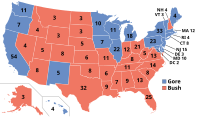
Balloter votes of the party that won in 2000: Republican Party
| 1996 electoral vote Bob Dole | Gains | Losses | 2000 balloter vote George W. Bush |
|---|---|---|---|
| 159 | 112 | 271 | |
| Arizona(8) Arkansas(6) Florida(25) Kentucky(eight) Louisiana(9) Missouri(xi) Nevada(4) New Hampshire(4) Ohio(21) Tennessee(xi) W Virginia(5) |
2004 vs. 2000 [edit]
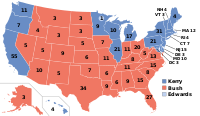
Electoral votes of the political party that won in 2004: Republican Party
| 2000 electoral vote George West. Bush | Gain due to reapportionment | 2000 result under the 2004 circulation | Gains | Losses | 2004 electoral vote George W. Bush |
|---|---|---|---|---|---|
| 271 | 7 | 278 | 12 | iv | 286 |
| Iowa(vii) New Mexico(5) | New Hampshire(4) |
2008 vs. 2004 [edit]
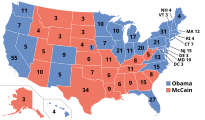

Cartogram of results in 2004, 2008 and the swing between the two. Each foursquare represents one electoral vote.
Electoral votes of the political party that won in 2008: Democratic Political party
| 2004 electoral vote John Kerry | Gains | 2008 electoral vote Barack Obama |
|---|---|---|
| 251 | 114 | 365 |
| Colorado(9) Florida(27) Indiana(11) Iowa(7) Minnesota(ane)* Nebraska(1)** Nevada(v) New Mexico(5) Northward Carolina(15) Ohio(20) Virginia(13) |
* Kerry received only 9 of Minnesota'southward 10 balloter votes in 2004, while 1 faithless elector voted for his running mate John Edwards
** Obama received 1 out of Nebraska's five full balloter votes
2012 vs. 2008 [edit]
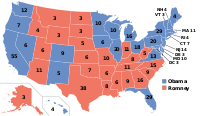
Electoral votes of the party that won in 2012: Democratic Political party
| 2008 electoral vote Barack Obama | Loss due to reapportionment | 2008 issue under the 2012 circulation | Gains | Losses | 2012 electoral vote Barack Obama |
|---|---|---|---|---|---|
| 365 | 6 | 359 | 27 | 332 | |
| Indiana(11) Nebraska(1)* North Carolina(15) |
* While Obama received 1 out of Nebraska's total balloter votes in 2008, he lost all of the state's votes in 2012
2016 vs. 2012 [edit]

Balloter votes of the party that won in 2016: Republican Party
| 2012 balloter vote Mitt Romney | Gains | Losses | 2016 electoral vote Donald Trump |
|---|---|---|---|
| 206 | 100 | 2 | 304 |
| Florida (29) Iowa (6) Maine (ane)* Michigan (16) Ohio (18) Pennsylvania (twenty) Wisconsin (10) | Texas (2)† |
*Trump received 1 of Maine'south four electoral votes, for his win in Maine'southward second Congressional district
†Trump received 36 of Texas'south 38 electoral votes, while two faithless electors voted for other candidates
2020 vs. 2016 [edit]

Electoral votes of the party that won in 2020: Democratic Political party
| 2016 balloter vote Hillary Clinton | Gains | Losses | 2020 electoral vote Joe Biden |
|---|---|---|---|
| 227 | 79 | 306 | |
| Arizona (11) Georgia (16) Michigan (16) Nebraska (1)* Pennsylvania (twenty) Wisconsin (10) Hawaii (1)† Washington (4)†† |
*Biden received 1 of Nebraska's five electoral votes, for his win in Nebraska's second Congressional district
†In 2016, Clinton received 3 of Hawaii's 4 balloter votes, while 1 faithless elector voted for Bernie Sanders in 2016
††In 2016, Clinton received 8 of Washington'due south 12 electoral votes, while iv faithless electors voted for other candidates in 2016
Source: https://en.wikipedia.org/wiki/Electoral_vote_changes_between_United_States_presidential_elections
Belum ada Komentar untuk "How Can the Number of Electoral Votes in a State Be Changed?"
Posting Komentar